

Who Pays?

This article isn’t really about dishes — it is about health, dignity, and being together with others and actually caring about them. We start with broken dishes because sometimes that is how these things rear their ugly head above the surface.
Maybe you are familiar with this community dilemma: You are joined together in values, purpose, and mission, and everything is swell, and then someone breaks a water glass and a plate. Whose responsibility is it?

In this case, our Dish Assassin (Devin) rather responsibly informed all of us what happened and that he would be paying for it. Quick, neat, done, over. Except he did not realize that he was living with a bunch of neurotic purpose-sniffers who surmised that he was engaged in some kind of self-blame ritual. Questions peppered all around him and when he admitted that his payment came from the orientation of “I have done wrong”, a new proposal was born: we all split the cost because we are a community.
“Ok, ok, but just how irresponsible was Devin being when he broke these things?”
“Yeah, were you at least centered, grounded, and bubbled?”
“Well, see, it was the craziest thing. I was standing there, it’s like 11:30 at night, and I’m washing the dish and I realize, wow, I barely have to apply any pressure on this plate to hold it there, I can kind of just like…” He mimes pressing the dish to his thumb with the pressure of the sponge. “Just wash the dish like that. And then I get scared! And I think to myself I bet this is exactly how dishes get broken, just when people are experimenting with things like this. So I start holding the dish normally again, and all of a sudden it falls and smashes into this glass and breaks both of them.”
Clinton jumps in “Aha! You were imagining the plate breaking. You see, you don’t know how powerful of a magician you are. The next time you have that thought ‘Oh man, I could break this’ instead of seeing the plate breaking, see all the dishes being perfectly clean and neatly stacked in the drying rack.”
Now, armed with this energetic tool so that this won’t happen again, Devin appears to be a responsible enough candidate for us to communally take on the cost without unduly rescuing him and slowing down his need for evolution. Except… in community there is always an “except.” Sophia jumps into the arena.
Her good-girl prevents her from really articulating what she wants to say, but it comes out, eventually. She doesn’t want to be his karmic trash can. She doesn’t want to bear responsibility for his broken dishes. In the tangle of not articulating this well, she eventually throws up her hands and says “Well, you all can do what you want, but I won’t pay.”
It is un-communal, and that has consequences. It does not allow her intelligence to be part of the group intelligence. Instead of warning us about the dangers of being karmic trash cans, she washes her hands and energetically leaves the space. Instead of considering herself part of the steering committee of the Bridgehouse, she declines to make a proposal to help us set our context and culture.

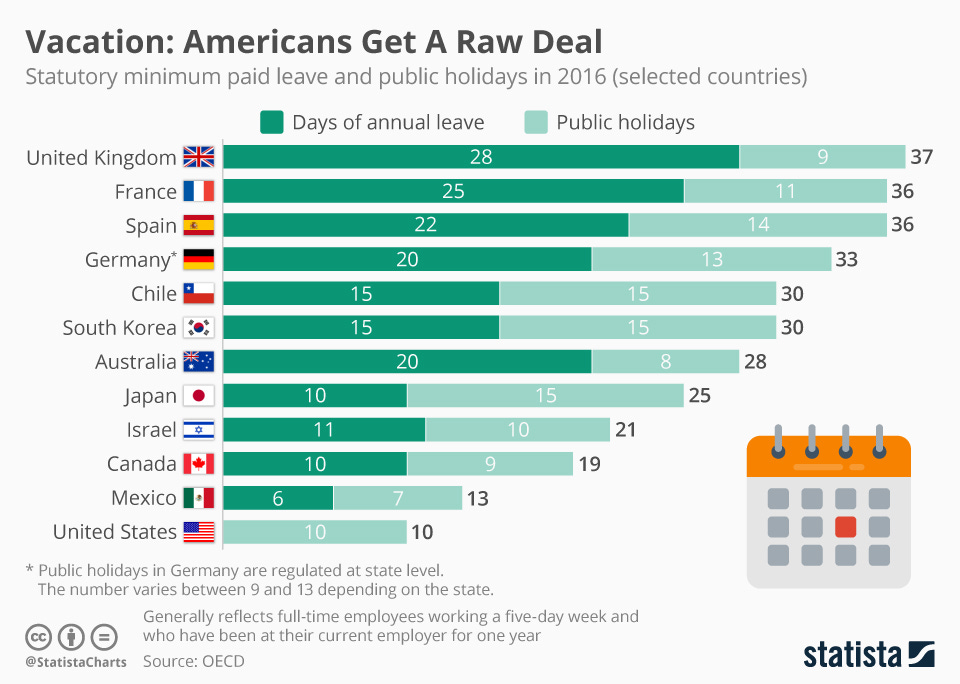
This isn’t about Sophia not wanting to pay. I am talking about the kind of individualism that says “well there is a problem but it's not exactly my problem, you do what you want, I’ll make it so it doesn’t affect me.” I did not get fully what the consequences of this individualism were until I watched a documentary here by Michael Moore called Where to Invade Next. Where to Invade Next is funny and tragic. Please watch it especially if you were born in America, or if you look up to America. In Where to Invade Next, Moore travels around a variety of countries (mostly Europe) looking for what is valuable about their cultures to claim for America. These are cultural ideas like serving healthy lunches in school, guaranteeing many weeks of paid vacation (there is 0 guaranteed by law in the USA), having willingness to prosecute bankers after the 2008 financial crisis (yes, Iceland actually did this), rehabilitation for lawbreakers rather than retribution and punishment, and more. I finished Where to Invade Next sad, and knowing how fucked up the politics and systems are in America, angry at how unlikely any of these good ideas would ever be given a chance to grow in America.
I began researching why these ideas could possibly take root in Europe, but not in America. It seems that there are two main reasons. One, Europe was so scarred by the horrors of World War II and fascism, that the culture became willing to safeguard against citizens’ voices ever being taken away again. The consequences were clear, terrible, and impossible to ignore for a continent ravaged by war and with much of a generation of men killed. America, once the lighthouse for democracy and civic duty, never saw how bad a government disconnected from its people could be, and the idea that everything is perfect here could continue unchallenged. Maybe things once were pretty good (at least for the people protected by law), but the world eventually changes.
The second main reason, oversimplifying things greatly, is that America’s ideas around individualism, of the power of being responsible for yourself and expecting nothing from others, can go totally awry. America was founded by people escaping persecution by moving to a new land, and for most of its history, any time things were bad economically, or socially, or politically, people could just move west to new states and territories. Even today, America has a population density of 38/km2, while Europe’s population density is 72/km2. What that means is that people in America have a “cut and run” survival strategy. Things get bad? Just move somewhere else. Just move to a dirt road somewhere where the government won’t bother you. In Europe, it seems, people have adopted a different strategy: learn to cooperate, learn to share, learn to collectively govern, learn to not leave others behind.

This difference in thoughtware has had big consequences. When big social reform movements happened in the 1970s, Europe was mostly successful in adopting policies that protected workers and helped share wealth with citizens. America was not. Europe got workers rights, inexpensive or free higher education, and health care, and America didn’t. And since then, things in America have been getting worse and worse and worse.
So, who pays?

I’ve written this pretty off the cuff. A deeper post with more numbers, more thoughts is likely to come. If things like this make you angry, or you have thoughts, please write to me.